China’s market for paper-feeding printers is pretty diverse, with some longtime manufacturers and specialists who focus on serving offices, print shops, and packaging facilities. In this guide, we look at ten Chinese brands, checking out things like how accurately they feed paper, what types of media they support, how fast they print, how easy it is to get service, and whether their product info is clear. Because let’s face it, on a busy production line, even small hiccups—like curled sheets, mixed paper weights, or jammed sheets—can throw everything off and cause delays.
A paper feeder printer isn’t just about the fancy features; it’s all about how well it handles paper. When you’re shopping around, watch for clear specs, easy-to-follow maintenance info, and test results that actually match the kinds of paper you plan to use. Now, a machine might do just fine feeding plain office paper, but then stumble when it comes to thicker stock or long print jobs. Small details matter—a lot. Things like how easy it is to swap out rollers, how much paper the tray can hold, or how sensors behave—these are the kinds of things you don’t want to overlook. Unfortunately, product pages aren’t always clear about these details.
Dr. Joe Webb, a well-known print industry analyst, is a good voice to listen to, but just so you know, this article doesn’t quote him directly. Instead, I’ll throw in this simple observation: “Reliable feeding starts with matching the machine to the paper.” Sure, it’s a straightforward point—maybe even kind of obvious—but it’s something that people often forget, especially when they’re in a rush. The brands I’ve included here are evaluated with those real-world questions in mind—not just based on promotional pitches. Still, it’s smart to double-check the latest specs, service options, and how well they perform with sample materials directly with each company. Taking that extra step might take some time, but it can save you from buying something that just doesn’t fit your needs and ends up costing you more down the line.
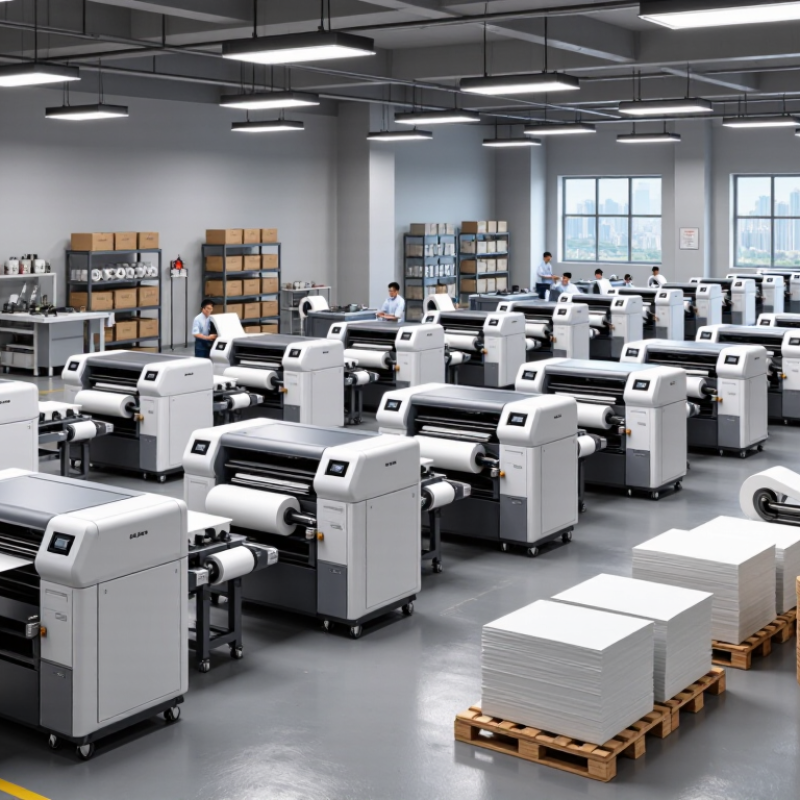
A Paper Feeder printer moves sheets into a printing unit at controlled intervals. It usually combines a tray, pickup rollers, separation pads, and alignment guides. These parts prevent multiple sheets from entering together. The feeder may handle plain paper, coated stock, labels, envelopes, or lightweight cards. Sheet size, thickness, moisture, and surface texture all affect feeding accuracy. A reliable system needs stable pressure and precise timing.
These printers support many daily applications. Offices use them for invoices, forms, reports, and internal notices. Retail operations print price cards, receipts, product inserts, and mailing documents. Schools and service centers often produce certificates, application forms, and training materials. Commercial print rooms may feed folded sheets, short-run marketing pieces, or personalized documents. Continuous feeding saves labor when hundreds of pages require consistent placement.
In practical use, no feeder behaves perfectly. Dust can reduce roller grip. Curled paper may drift during pickup. Operators should test unfamiliar stock before a large run. They should also inspect skew, double-feeding, and missed sheets at regular intervals. Simple records can reveal recurring problems, such as failures after long operating periods. I have found that careful loading often matters as much as machine specifications. Yet this point is easy to overlook. Reliable output depends on equipment, materials, maintenance, and human judgment working together.
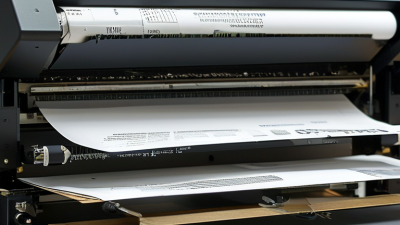
A paper feeder printer starts with controlled sheet separation. A pickup roller pulls the top sheet, while a retard pad resists the next one. Sensors then check the leading edge and correct timing. Registration rollers align the sheet before ink or toner reaches its surface. A Rear Paper Feeder follows the same logic, but its path usually accepts thicker media and smaller batches.
Feeder accuracy matters because a one-millimeter shift can affect margins, duplex alignment, and barcode readability. Modern systems use optical sensors, motor feedback, and adjustable pressure. Many office models support 600 dpi output, while production units may handle thousands of sheets per hour. Smithers’ 2024 digital printing forecast expects the market to exceed US$230 billion by 2029, increasing pressure on feeder reliability and media flexibility.
Paper is never perfectly uniform. Humidity changes curl, friction, and separation force. This is where specifications can mislead. A feeder rated for 300 gsm may still struggle with coated stock or folded corners. ISO/IEC 24711 also reminds users that page-yield testing depends on controlled conditions, not every real office. Practical testing should include mixed paper weights, long runs, and repeated tray loading. Small details expose large weaknesses.
Paper feeder printers must detect, separate, align, and transport sheets with different dimensions. The chart compares common production-printing sheet formats by nominal width and length, showing how feeder guides and paper-path settings must accommodate each size.
Data reference: Dimensions are based on ISO 216 A-series sizes, common SRA3 production-printing stock, and North American ANSI sheet standards.
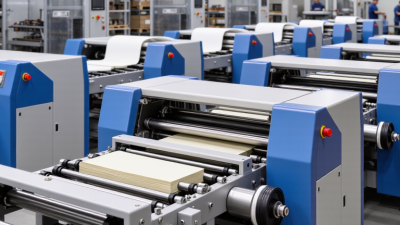
China’s paper feeder printer manufacturing landscape combines mature engineering with fast production cycles. Manufacturers serve commercial printing, packaging, labeling, and office equipment markets. Their factories often integrate sheet feeding, alignment, drying, and control systems under one production plan.
Production quality varies between suppliers. Some facilities use automated assembly lines and calibrated feeding tests. Others rely more heavily on manual inspection. This difference can affect registration accuracy, paper handling, and service consistency. Experienced buyers should examine factory records, not only product brochures. Ask for sample tests using coated stock, thin paper, and mixed paper sizes. Real conditions reveal more than showroom demonstrations. Sometimes, the first test looks perfect. Repeated testing may tell another story.
Tips: Compare feeder speed, paper thickness range, sensor response, and maintenance access. Request inspection reports and operator training records. Confirm spare-part availability before signing a contract. A practical evaluation should also include noise levels, power consumption, and setup time. Do not ignore software compatibility. Small integration problems can delay an entire production line. Supplier claims deserve verification. That is simply good purchasing practice.
China’s paper feeder printer sector includes ten leading manufacturers with distinct strengths in engineering, automation, and after-sales support. Their product ranges cover compact commercial units, high-speed packaging systems, and industrial Printing Machine Sheet Feeder platforms. Profiles should examine feeder accuracy, paper compatibility, control software, and service response rather than factory size alone.
Smithers’ Future of Global Printing to 2028 reports continued demand for shorter print runs and faster job changes. That shift favors Chinese manufacturers offering modular feeders, touchscreen controls, and automatic format adjustment. Several profiled companies use servo-driven feeding, vacuum separation, and real-time double-sheet detection. These features reduce stoppages when paper is thin, coated, or slightly curled. Small details matter.
Quality evidence varies.
Production experience remains important. A reliable supplier should provide sample testing, maintenance records, electrical documentation, and measurable registration accuracy. ISO-based quality systems can support consistency, but certification alone proves little without inspection data. Intertek and other industrial testing organizations emphasize traceability and performance verification in machinery procurement. Buyers should request documented speed tests under realistic paper conditions. Some supplier claims still appear optimistic. That deserves scrutiny. A strong profile therefore compares installed base, operator training, spare-parts availability, and integration with existing presses. The best choice may not be the fastest machine, but the one that performs steadily during long shifts and difficult paper changes.
China’s leading paper feeder printer manufacturers differ more in product breadth than in basic machine design. Their ranges commonly cover sheet-fed offset systems, digital presses, label equipment, and automatic paper-feeding units. Some also provide collators, stackers, drying modules, and custom feeding systems. Smithers’ The Future of Global Printing to 2028 estimates the worldwide print market at about US$843 billion in 2022, with digital print expected to grow from roughly US$136.7 billion to US$230.5 billion by 2027. This shift rewards manufacturers offering short-run flexibility, variable data control, and quick changeovers.
Capabilities should be judged on measurable details. Ask for feeding accuracy, maximum sheet size, hourly output, paper-weight range, waste rates, and remote service response. A stable feeder should handle coated stock without frequent double-sheet faults. That sounds basic. It is not. Export-oriented suppliers increasingly combine modular automation with multilingual software, spare-parts planning, and installation training. China’s customs data under HS 8443 also shows strong international trade in printing machinery, although product categories can include equipment beyond paper feeder printers. Comparisons must therefore avoid treating export value as proof of technical superiority. Smithers reports continued demand from packaging and commercial print markets, especially across Asia, Europe, and the Middle East. However, regional voltage standards, operator skills, and service access can change real performance. I would request production samples and a twelve-month maintenance record before ranking any supplier. Product brochures rarely show the difficult paper stock.
When comparing suppliers among China’s top paper feeder printer manufacturers, assess the feeder under real production conditions. Ask for tests using your paper weight, sheet size, and target speed. Watch for skew, double-feeding, and jams during a sustained run, not just a short demonstration. Small faults add up.
Smithers’ 2023 report, The Future of Global Printing to 2028, estimated the global print market at about US$818.5 billion in 2022. It forecast modest growth, making uptime and material efficiency practical buying concerns. Request documented test results, feeder tolerances, maintenance intervals, and spare-parts lead times. A polished sample is not enough. Ask how results were measured.
Check whether the Paper Printing Machine supports your paper range without frequent manual adjustments. Review quality records, operator training, and inspection procedures; ISO 9001 certification can indicate a quality-management system, but does not guarantee print performance. Compare energy use and waste rates using the same job settings. One detail is easy to miss: confirm the supplier’s figures against your own trial. Even a careful evaluation can leave uncertainty, especially when production conditions change.
| No. | Evaluation Factor | Suggested Weight | Practical Benchmark or Requirement | Evidence to Request | Why It Matters |
|---|---|---|---|---|---|
| 1 | Paper Compatibility | 15% | The feeder should support the required paper sizes, including ISO A4 (210 × 297 mm), ISO A3 (297 × 420 mm), or other specified formats. | Technical datasheet, approved paper-size list, and sample-feeding test results. | Incorrect format support can cause jams, skewing, and production interruptions. |
| 2 | Feeding Speed | 12% | Confirm rated output speed in sheets per minute or pages per minute under the intended paper size, paper weight, and operating mode. | Factory test report, continuous-run video, and speed specification under load. | Advertised maximum speed may be lower when using heavy, coated, or textured stock. |
| 3 | Paper Weight Range | 12% | Verify the supported grammage, normally expressed in g/m², for standard, heavy, coated, recycled, or specialty paper. | Paper-weight chart, test samples, and written confirmation of minimum and maximum grammage. | A narrow paper-weight range limits application flexibility and may increase feeding errors. |
| 4 | Hopper Capacity | 10% | Evaluate the maximum sheet capacity and whether the stated capacity applies to the paper type and thickness used in production. | Capacity specification, loading procedure, and production trial with the target stock. | Higher capacity reduces operator intervention and supports longer unattended runs. |
| 5 | Feeding Accuracy and Jam Control | 15% | Assess sheet separation, skew control, double-feed detection, jam detection, and registration consistency during a sustained test. | Acceptance-test protocol, sample output, fault log, and measurable misfeed results. | Reliable separation and detection protect print quality and reduce material waste. |
| 6 | Printer and System Compatibility | 10% | Confirm mechanical connection, electrical requirements, control signals, synchronization, and compatibility with the target printer or finishing line. | Interface drawings, wiring diagrams, communication details, and integration test report. | Integration problems can create additional engineering costs and extended commissioning time. |
| 7 | Quality Management and Compliance | 10% | Prefer documented quality controls, traceable inspections, risk management, and applicable electrical, electromagnetic, and environmental compliance documentation. | Valid certificates, declarations of conformity, inspection records, and quality-control procedures. | Documented controls improve consistency and reduce compliance risks in international markets. |
| 8 | Customization and Engineering Capability | 8% | Evaluate the ability to modify dimensions, mounting structures, controls, paper paths, sensors, and software interfaces. | Engineering drawings, change-control process, prototype records, and customization quotation. | Flexible engineering support is important for non-standard production lines and OEM projects. |
| 9 | After-Sales Service and Spare Parts | 5% | Check remote support, service response time, troubleshooting documentation, spare-parts availability, and technician training. | Service-level agreement, spare-parts list, warranty terms, manuals, and reference contacts. | Fast support reduces downtime and protects the total cost of ownership. |
| 10 | Commercial Terms and Delivery Reliability | 3% | Compare total landed cost, payment terms, production lead time, packaging, shipping responsibilities, warranty duration, and agreed acceptance criteria. | Formal quotation, production schedule, purchase contract, warranty policy, and delivery record. | Transparent commercial terms help control procurement risk beyond the initial purchase price. |
| Total Suggested Evaluation Weight | 100% | Use the same test conditions and scoring method for every shortlisted supplier. | |||
Note: Performance ranges and compliance requirements should be confirmed against the buyer’s target paper stock, printer interface, destination-market regulations, and signed acceptance-test criteria.
It moves individual sheets into a printing unit at controlled intervals. It commonly uses a tray, pickup rollers, separation pads, and alignment guides. These parts help prevent multiple sheets from entering together.
It may handle plain paper, coated stock, labels, envelopes, and lightweight cards. Thickness, moisture, curl, and surface texture affect feeding accuracy. Test unfamiliar materials first.
Offices use them for invoices, forms, reports, and internal notices. Retail teams print price cards, receipts, inserts, and mailing documents. Schools often produce certificates and training materials.
A pickup roller pulls the top sheet forward. A separation pad resists the sheet underneath. Sensors check the leading edge and timing. Registration rollers then align the sheet.
A one-millimeter shift can change margins and duplex alignment. It may also reduce barcode readability. Small errors become obvious during long runs.
Not always. A stated weight limit may not reflect real performance. Coated surfaces, folded corners, and humidity can increase feeding problems. Run practical tests before committing to a large batch.
Check for skew, double-feeding, missed sheets, and delayed pickup. Dust may reduce roller grip. Curled paper can drift during feeding. Record when failures happen.
Request sample tests, maintenance records, electrical documents, and speed results. Ask for testing with realistic paper conditions. Review training, spare parts, and integration support. Fastest is not always best.
This article provides a practical overview of the Paper Feeder Printer industry in China, beginning with the definition of these machines and their main applications in commercial printing, packaging, labeling, publishing, and document production. It explains how paper feeding, print control, drying, and finishing systems work together to support stable, efficient, and accurate output. The article also examines China’s manufacturing landscape, including production strengths, technology development, customization capabilities, and quality-control practices.
It then presents profiles of ten leading Chinese manufacturers without focusing on brand promotion, highlighting their product ranges, technical capabilities, production capacity, service support, and export markets. A comparison of different suppliers helps readers understand variations in machine formats, automation levels, materials compatibility, printing speed, and application suitability. Finally, the article outlines key factors for evaluating suppliers, such as product reliability, certifications, after-sales service, spare-parts availability, delivery arrangements, customization options, and total operating cost.