Leave Your Message
0%

Picking a reliable Pad Printing Machine supplier isn’t just about checking prices or reading through glossy catalogs. Honestly, you’ve gotta see some real-world evidence—like actual print samples, how tight the machine’s tolerances are, how quickly they respond to service calls, and whether they have readily available replacement parts. Keep in mind, a machine that looks awesome on the showroom floor might not be so great when it’s working on curved medical housings, textured automotive switches, or tiny cosmetic containers—stuff that’s tricky in the real world.

In this guide, I’ve looked at ten well-known suppliers—names like Inkcups, Teca-Print, Tampoprint, ITW Trans Tech, Printing International, Comec Italia, Kent Pad Printing, Printex, Finecause, and Pad Print Machinery of Vermont. Their strengths are pretty different, too. Some really excel at high-speed automation, while others are better for shorter runs and more customized jobs. I focused on how much engineering experience they have, their global support networks, ink compatibility, automation options, training for operators, and how easy it is to do maintenance over the long run. Trust me, small things like a reliable pneumatic system, accessible tooling, and simple adjustment controls can save you hours during production—that stuff really adds up.

No one’s perfect, though. A high-end machine might be overkill for a small workshop, and on the other hand, a cheaper model might end up costing you more in the long run with downtime or tricky repairs. So, I’m not just talking about brand reputation here; I’m sharing practical insights based on real buyer experiences and lessons learned when testing out equipment. Keep in mind, results can vary depending on the substrate, artwork complexity, and how much you’re running. It’s a good idea to request some test prints, check out the machines already installed, and confirm warranty details before you make any final decisions. Skipping these steps is tempting, but trust me, it’s worth doing them properly—it could save you headaches later.
Top 10 Pad Printing Machine Suppliers for Global Buyers

What Is a Pad Printing Machine and How Does It Work?

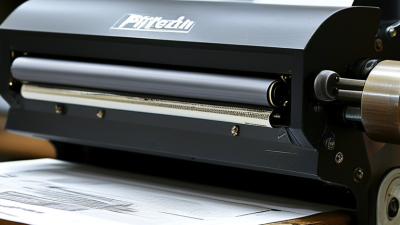
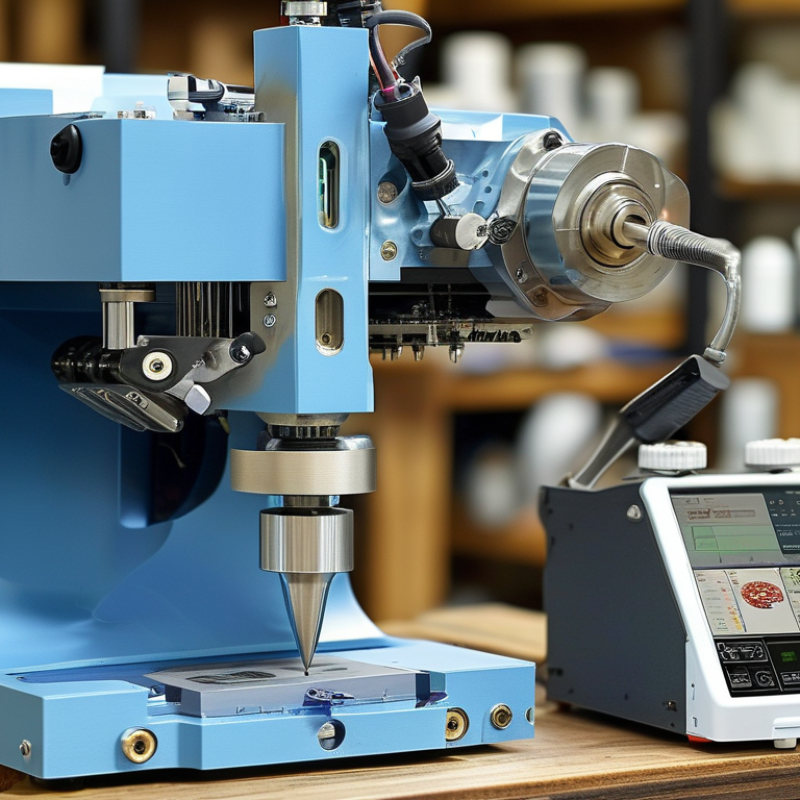
A pad Printing Machine transfers ink from an etched plate onto a shaped surface. Unlike flat-screen printing, it uses a flexible silicone pad that changes shape during contact. This makes the process suitable for curved, recessed, or uneven products.

The operation follows a controlled sequence. First, a metal or polymer plate receives a thin ink layer. A doctor blade removes excess ink, leaving color inside the engraved image. The silicone pad presses gently onto the plate and picks up that image. It then moves over the product and compresses against its surface. The ink releases cleanly. Simple in theory.

In a real production line, results depend on ink viscosity, pad hardness, plate depth, and printing pressure. Temperature and humidity can also affect drying speed and adhesion. A practical technician checks the first pieces under bright, angled light. Tiny gaps or blurred edges often reveal incorrect pressure. The Printing Machine must also hold steady alignment during repeated cycles. I would not assume one pad fits every design; that shortcut can create uneven coverage. Some materials need surface treatment, while others require a slower curing process. Testing on the actual product remains more reliable than trusting a catalog specification.

Key Criteria for Evaluating Global Pad Printing Machine Suppliers

When comparing the top 10 pad printing machine suppliers, global buyers should examine more than price. Practical experience matters. A reliable supplier should explain pad hardness, ink compatibility, cycle speed, and fixture design clearly. Request printed samples using your actual parts, especially curved surfaces, small symbols, or uneven textures. A clean sample proves more than a polished brochure.

Check engineering capability, quality controls, delivery history, and after-sales support. Ask for machine drawings, test records, spare-parts lists, and operator training details. Confirm whether technicians can respond across time zones. Total cost includes tooling, shipping, installation, maintenance, and production downtime. An alternative Uv Printing Machine may suit some applications, but the supplier should explain its limits honestly. Vague promises are warning signs. Not every high-priced machine is better.

Tips: Use a written scorecard. Compare ten suppliers using the same questions. Check two recent customer references, not only older testimonials. Watch a live demonstration and inspect the machine’s wiring, guards, controls, and adjustment points. Ask how quickly common parts can arrive. A thoughtful supplier will discuss failed tests and corrective actions, too. I once focused too heavily on print speed; later, setup consistency mattered more. That mistake is worth remembering. A supplier may meet specifications yet still struggle with documentation or communication. Leave room for doubt, and verify every important claim.

Top 10 Pad Printing Machine Suppliers for Global Buyers

Key Criteria for Evaluating Global Pad Printing Machine Suppliers

This buyer-evaluation framework assigns 100 percentage points to the criteria most relevant to international pad printing machine procurement. Product quality, printing precision, technical support, delivery capability, customization, warranty coverage, and total cost should be assessed consistently across shortlisted suppliers.

Top 10 Pad Printing Machine Suppliers for International Buyers

International buyers need more than a long supplier list. A credible top-ten ranking should examine machine stability, export experience, technical support, and documented quality systems. According to Smithers’ packaging print market research, global packaging print value remains near the 500-billion-dollar level annually. This scale increases demand for accurate, repeatable pad printing equipment.

The strongest suppliers offer pneumatic or servo-driven machines, adjustable print pressure, and stable ink-cup control. Buyers should request samples using their actual parts, inks, and artwork. A sharp logo on a flat test panel proves very little. Ask for cycle-time records, spare-parts lists, installation videos, and operator training details.

That evidence matters.

International delivery creates hidden costs. PMMI industry reports show packaging machinery purchasing increasingly depends on automation, serviceability, and total ownership cost. A supplier may provide a lower quotation, yet delayed parts can stop production for weeks. Check voltage compatibility, customs documents, remote diagnostics, and local service coverage.

I would not rank suppliers by price alone. That assumption can fail. Some machines appear affordable but require expensive tooling changes for curved surfaces. Buyers should also verify warranty exclusions, response times, and references from companies using similar materials. The best choice is not always the largest exporter; it is the supplier that explains limitations clearly and supports the machine after arrival.

Comparing Supplier Product Ranges, Technologies, and Industry Uses

Top 10 Pad Printing Machine Suppliers for Global Buyers

Comparing Supplier Product Ranges, Technologies, and Industry Uses

A useful top-ten comparison should examine more than catalog size. It should assess machine formats, print colors, automation levels, and supported materials. Entry-level tabletop machines suit small components and short production runs. Rotary and servo-driven systems support higher volumes, tighter registration, and repeatable cycle times. Grand View Research valued the global digital printing market at approximately USD 36 billion in 2023, showing strong demand for flexible decoration technologies.

Technology Fit

Technology fit matters. Pneumatic machines remain practical for simple logos on plastic, glass, metal, and silicone parts. Servo systems offer better control over pressure, speed, and pad movement. Some suppliers also provide vision inspection, automatic feeding, and quick-change tooling. A Dtf Printing Machine may suit textile graphics, but it is not a direct replacement for pad printing on curved industrial parts. Industry reports from Smithers continue to highlight digital printing’s growth in customized and short-run production.

Application Evidence and Supplier Selection

Application evidence should guide supplier selection. Medical components require controlled processes and traceable ink systems. Automotive parts often need durable marks after heat, chemicals, and abrasion. Consumer products may prioritize color accuracy and fast changeovers. Ask for sample testing using your actual surface and artwork. Service response matters too. A perfect ranking is unlikely. Some suppliers publish impressive specifications, yet practical setup can feel slower than expected. Compare training, spare-part access, energy use, and verified production samples before purchasing.

Assessing Quality, Certification, Support, and Global Delivery

For global buyers comparing the top 10 pad printing machine suppliers, quality begins with repeatable output. A Tag Printing Machine should maintain clear edges across metal, plastic, and curved components. Ask for sample tests using your actual ink, pad hardness, and artwork. A clean result under showroom lighting proves little. Check registration drift after several hours.

Certification adds confidence, but it does not replace inspection. The ISO Survey 2022 recorded 1,265,216 ISO 9001 certificates across 189 countries and economies. Request the supplier’s certificate number, scope, and current audit status. ISO 14001 can also indicate controlled environmental processes. Still, paperwork can age badly. Review calibration records, rejected-part rates, and corrective-action reports.

Global delivery needs evidence beyond a shipping promise. The World Bank’s Logistics Performance Index 2023 assessed 139 countries across customs, infrastructure, shipment quality, and timeliness. Ask who manages export documents, spare-part customs codes, and local service escalation. A practical supplier should provide wiring diagrams, operating videos, and remote troubleshooting within agreed hours. I would also test packaging: the machine should arrive with sealed electronics, braced frames, and moisture indicators. One overlooked weakness remains training. A fast machine can become expensive when operators adjust pressure by guesswork. Require bilingual manuals, commissioning support, and a short acceptance test at your facility.

Top 10 Pad Printing Machine Suppliers for Global Buyers - Assessing Quality, Certification, Support, and Global Delivery
Rank Supplier Profile Machine Range Typical Maximum Print Area Automation Capability Common Certification Evidence Quality-Control Indicators Technical Support Global Delivery Readiness Export Documentation Overall Score
1 Profile A
High-volume specialist
Automatic and multi-color pad printing systems for industrial production Up to approximately 150 × 150 mm, depending on configuration PLC control, automatic ink cups, conveyor integration, vision options ISO 9001 quality system; CE documentation available for applicable markets Factory acceptance testing, sample approval, repeatability checks, spare-part traceability Remote commissioning, operating manuals, video training, regional service partners Strong export experience; sea, air, and multimodal freight options Commercial invoice, packing list, bill of lading, certificate of origin when required 9.2 / 10
2 Profile B
Precision-focused
Servo-driven machines for precision components and technical products Up to approximately 120 × 100 mm Servo positioning, programmable recipes, automatic pad cleaning ISO 9001 evidence; electrical conformity documents supplied by configuration Dimensional inspection, print-registration testing, documented final inspection Application engineering, artwork review, remote diagnostics, replacement-part support Reliable international packing standards and established freight coordination Technical drawings, wiring diagrams, manuals, packing and customs documents 9.0 / 10
3 Profile C
Flexible production
Manual, semi-automatic, and automatic machines for varied batch sizes Up to approximately 100 × 100 mm Modular automation, rotary tables, feeder and conveyor compatibility ISO 9001 or equivalent quality documentation; CE marking support where applicable Pre-shipment testing, color-registration checks, component inspection records Fast pre-sales consultation, installation guidance, multilingual documentation Suitable for container, pallet, and courier shipments to major regions Standard export package with installation and maintenance documentation 8.8 / 10
4 Profile D
Compliance-oriented
Enclosed automatic machines for regulated and safety-sensitive applications Up to approximately 130 × 130 mm Safety interlocks, PLC systems, sensor monitoring, optional vision inspection ISO 9001; risk assessment and electrical safety files available upon request Safety-function testing, calibration records, print-quality sample retention Structured commissioning process, preventive-maintenance schedules, online support Good readiness for international installation and compliance reviews Declaration of conformity, manuals, risk information, spare-parts list 8.7 / 10
5 Profile E
Cost-effective
Semi-automatic and compact automatic equipment for small and medium batches Up to approximately 80 × 80 mm Basic PLC control, automatic ink-cup movement, optional indexing table Supplier quality certificate; CE-related documents depend on the selected model Functional testing, visual inspection, basic sample-print approval Email and video support, standard manuals, remote troubleshooting Competitive export pricing with standard palletized delivery Commercial invoice, packing list, operation manual, spare-parts recommendations 8.4 / 10
6 Profile F
Custom-engineering
Customized systems for irregular parts, rotary products, and integrated lines Approximately 50–180 mm, subject to tooling and application design Robotics, custom fixtures, conveyors, camera inspection, line-control integration ISO 9001 evidence; project-specific conformity and safety documentation Design review, process validation, tooling trials, acceptance testing Dedicated project engineer, factory trials, integration and commissioning support Strong for engineered projects; delivery time depends on customization scope Layout drawings, utility requirements, risk documents, commissioning records 8.3 / 10
7 Profile G
Regional exporter
Standard one- and two-color machines for general industrial marking Up to approximately 90 × 90 mm Semi-automatic indexing, pneumatic controls, optional part feeders Basic quality-management documentation; conformity files available by model Assembly checklist, print-sample verification, basic electrical testing Remote support during setup, replacement-parts assistance, standard training materials Regular shipments to neighboring and selected overseas markets Standard export documents; destination-specific requirements should be confirmed 8.0 / 10
8 Profile H
Application specialist
Machines optimized for plastics, electronics, promotional products, and labels Up to approximately 110 × 110 mm Recipe storage, automatic ink-cup systems, optional rotary or linear indexing Quality-system records and electrical conformity documents available for selected units Substrate testing, ink adhesion checks, registration verification, pre-delivery trial Strong application advice, consumables guidance, artwork and fixture consultation International shipment support with buyer-approved freight options Machine manual, ink and pad recommendations, maintenance schedule, export documents 7.9 / 10
9 Profile I
Entry-level supplier
Benchtop and compact semi-automatic machines for low-to-medium output Up to approximately 70 × 70 mm Pneumatic operation, manual loading, optional simple worktable automation Product conformity statement; certification scope should be verified before purchase Basic functional inspection and sample-print confirmation Manuals and online assistance; local technical service may be limited Suitable for standard export orders and courier delivery of smaller units Basic commercial and shipping documents supplied with the order 7.6 / 10
10 Profile J
Small-batch specialist
Compact machines for prototypes, laboratories, workshops, and short runs Up to approximately 60 × 60 mm Manual or semi-automatic operation with simple programmable controls Model-specific conformity information; independent verification recommended Basic machine testing, operator demonstration, visual print inspection Telephone or email support, digital manuals, optional setup assistance Good for small international orders; lead time varies with customization Invoice, packing list, operating instructions, recommended spare parts 7.3 / 10
Assessment basis: machine capability, documented quality controls, certification transparency, technical support, export readiness, and documentation completeness. Certification and delivery claims should be verified against the exact machine model, destination-country requirements, and current supplier documentation before purchase.

How to Select the Right Pad Printing Machine Supplier for Your Needs

Choosing the right pad printing machine supplier requires more than comparing online prices. Your product material, print area, production volume, and required accuracy should guide the search.

Ask suppliers to run a sample test using your actual parts, ink, and artwork. Observe registration, drying time, color density, and surface adhesion. A reliable supplier will explain pad hardness, cliché options, cup systems, and machine settings clearly. They should also provide technical drawings, safety documents, installation guidance, and maintenance schedules.

Request references from companies with similar production needs. Speak with their operators if possible. Their daily experience often reveals problems hidden in polished sales presentations. Check whether the supplier stocks critical parts, responds quickly, and offers practical training after installation. Warranty terms matter, but service response can matter more.

Do not judge quality from one successful sample. I once saw a clean test print fail after several hours of continuous operation. That mistake changed the evaluation process. Test repeatability, temperature changes, ink consumption, and cleaning procedures before making a decision.

A capable supplier should discuss integration with conveyors, sensors, vision systems, or robotic loading when needed. They should also understand workplace safety and applicable local requirements. Be cautious when answers remain vague. A low purchase price may become expensive through unstable printing, long downtime, or unavailable spare parts. Reliable communication is part of machine performance.

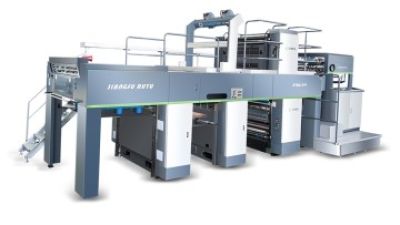
RYJC104 Large Double-Sided Monochrome Printing Online Inspection Machine: Features, Benefits, and Applications

The RYJC104 Large Double-Sided Monochrome Printing Online Inspection Machine combines high-speed double-sided offset printing with precision vision inspection, enabling continuous quality control without interrupting production. Its inspection unit detects defects such as missing characters, uneven density, streaks, smudges, registration errors, and image inconsistencies in real time. This capability is particularly valuable for confidential documents, manuals, examination papers, answer sheets, books, periodicals, maps, and other high-value materials where even a minor printing error can lead to rework, waste, or delivery delays. By checking both sides of the substrate during production, the system supports consistent output and reduces dependence on manual sampling.

Industry research also highlights the growing importance of automated print quality management. Smithers’ market analysis has forecast digital print growth at approximately 6% annually through 2028, reflecting stronger demand for flexible, data-sensitive, and short-run production. In this environment, online inspection helps converters and commercial printers maintain stable quality while controlling labor and material costs. The RYJC104 is suitable for production lines that require high-speed monochrome printing, accurate front-to-back registration, and immediate identification of defective sheets. Its real-time monitoring can improve process visibility, shorten response times, and support traceable quality assurance for applications where reliability and document accuracy are essential.

FAQS

What is a pad printing machine?

It transfers ink from an etched plate onto curved, recessed, or uneven surfaces. A flexible silicone pad carries the image. Simple in theory.

How does the printing process work?

A thin ink layer fills the engraved artwork on a plate. A doctor blade removes excess ink. The pad picks up the image and presses it onto the product. Ink releases during contact.

Which factors affect print quality?

Ink viscosity, pad hardness, plate depth, pressure, temperature, and humidity all matter. Incorrect pressure can create blurred edges or tiny gaps. Check samples under bright, angled light.

Can one pad print every product?

Usually not. Pad shape and hardness should match the artwork and surface. I would not trust one universal pad. Test the actual product first.

What surfaces can this machine print?

It can print on metal, plastic, and curved components. Some surfaces need treatment for better adhesion. Others require slower curing.

How should buyers test machine performance?

Request samples using your actual ink, artwork, and pad hardness. Inspect registration after several hours, not only under showroom lighting. A clean first piece proves little.

What certification and records should buyers check?

Ask for current certificates, their scope, and audit status. Review calibration records, rejected-part rates, and corrective-action reports. Paperwork can age badly.

What support matters during international delivery?

Confirm responsibility for export documents, spare-part customs information, and service escalation. Require wiring diagrams, operating videos, bilingual manuals, and remote troubleshooting.

How should the machine be packaged?

Packaging should include braced frames, sealed electronics, and moisture indicators. These details reduce transport risks. They do not guarantee perfect arrival.

Conclusion

This guide explains what a Pad Printing Machine is and how it transfers images from an etched plate to products with precision, even when surfaces are curved, uneven, or difficult to print. It outlines the main factors international buyers should consider when evaluating suppliers, including machine performance, printing speed, automation options, material compatibility, customization, operating costs, and ease of maintenance. The article also compares supplier product ranges, printing technologies, and common industrial applications to help readers understand which solutions may fit different production requirements.

In addition, the guide highlights the importance of quality control, safety standards, certifications, technical support, spare-parts availability, training, packaging, and reliable global delivery. Rather than focusing only on price, buyers are encouraged to assess long-term value, production stability, service responsiveness, and supplier experience. By matching machine capabilities with product design, print volume, budget, and future expansion plans, companies can select a dependable Pad Printing Machine supplier that supports efficient and consistent manufacturing.
Ethan

Ethan

Ethan is a dedicated marketing professional at Jiangsu Ruyu Machinery Manufacturing Co., Ltd., a prominent state-level high-tech enterprise in China. With a profound expertise in precision machinery, he plays a crucial role in showcasing the company’s extensive range of sheet-fed double-sided......
Previous Why Choose Screen Printing Equipment for Your Business?