Leave Your Message
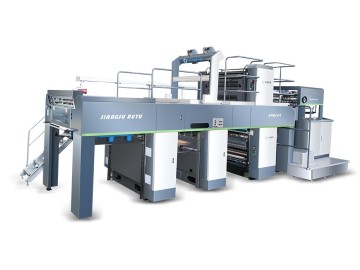
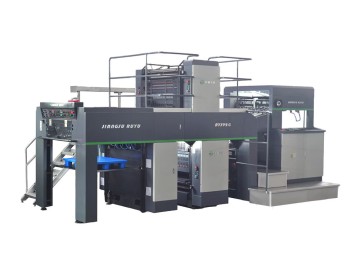
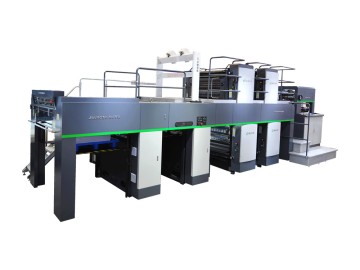
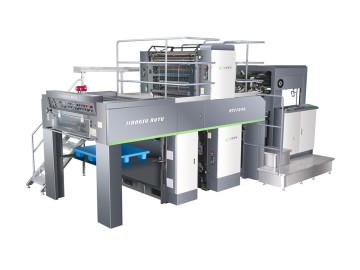
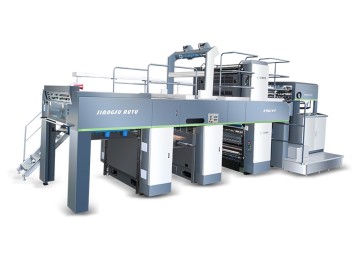
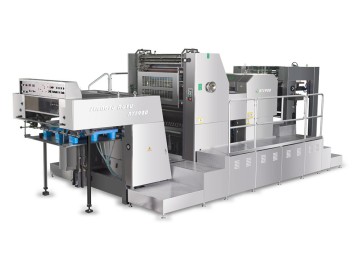
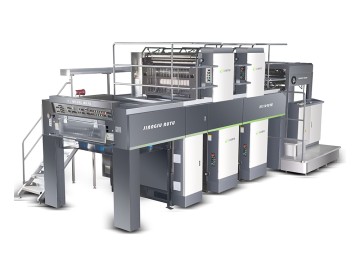
Explore our top-tier machinery designed to optimize monochrome and two-color printing workflows with integrated online inspection technology.
In an era dominated by high-speed digital printers and fully automated inline presses, the manual screen printing machine continues to hold a vital, irreplaceable position in the global manufacturing landscape. Specifically, for large-format monochrome and two-color print jobs, manual systems provide a unique combination of substrate versatility, heavy ink deposition, and cost-effective low-to-medium volume production that automated systems simply cannot match economically.
Large-format screen printing involves printing designs on extensive surface areas, often exceeding typical poster sizes. When limited to monochrome (single-color) or two-color configurations, these tasks generally focus on functional, highly durable, or high-contrast graphics. Industries ranging from automotive manufacturing and aerospace electronics to architectural glass and industrial textiles rely on these machines to apply thick, resilient coatings, conductive inks, and bold graphical identifiers.
From a commercial perspective, the setup cost for an automated large-format printing line is astronomical. Setting up screen stencils, adjusting registration systems, and calibrating ink viscosity for a massive automatic run can take hours of skilled labor. If the production run is small or medium-sized (e.g., 50 to 500 units), the overhead costs per print on an automated line become prohibitive.
A manual screen printing machine, by contrast, offers rapid setup times and minimal capital investment. It allows manufacturers to remain highly agile, accepting custom jobs with short lead times. Furthermore, maintenance costs are virtually negligible compared to automatic presses, which feature complex pneumatic, electronic, and hydraulic systems prone to wear and tear.
"The survival of manual screen printing in a digital age is not a matter of nostalgia—it is a matter of physics and economics. No other technology deposits as much ink thickness on such a wide variety of rigid and flexible substrates."
Why are monochrome and two-color jobs so prominent in industrial manufacturing? The answer lies in functional utility. Most industrial prints are not decorative pictures; they are functional interfaces, warning labels, or circuitry. A single layer of high-opacity white ink on a black control panel, or a two-color safety sign (black and red on a yellow substrate), requires high visibility and absolute durability.
Manual screen printing allows the operator to control the exact thickness of the ink deposit. By choosing different mesh counts and adjusting squeegee pressure manually, the operator can lay down a layer of ink that is up to ten times thicker than that produced by digital inkjet printers. This thick layer ensures maximum opacity, vibrant color saturation, and exceptional resistance to UV light, chemical exposure, and mechanical abrasion.
One of the greatest strengths of the manual screen printing machine is its ability to handle almost any material. Whether the substrate is a heavy sheet of tempered glass, a flexible membrane switch made of polyester, a sheet of brushed aluminum, or a thick piece of industrial canvas, a manual press can accommodate it. The operator can manually load, align, and unload heavy or awkward substrates without risking damage to sensitive automatic feeding mechanisms.
How large-format manual screen printing drives innovation and efficiency across diverse industrial sectors.
In electronics manufacturing, manual screen printing is widely used to deposit conductive silver or carbon inks onto flexible plastic films. These prints form the circuitry for membrane switches used in medical devices, industrial machinery, and household appliances. The manual control over squeegee speed and angle ensures uniform ink deposit, preventing micro-cracks or thin spots that could cause electrical failure.
Large-format glass panels used in modern architecture often require monochrome patterns for solar control, privacy, or aesthetic decoration. Manual screen printing machines allow operators to handle these extremely heavy glass sheets safely. Ceramic frit inks are printed onto the glass surface and then fired in a tempering furnace, fusing the ink directly into the glass for permanent durability.
Traffic signs, safety notices, and large-format outdoor billboards must withstand years of exposure to sunlight, rain, and temperature fluctuations. Manual screen printing using UV-stabilized monochrome or two-color inks ensures the graphics remain bold and legible for decades. The process allows for the application of reflective inks that are difficult to process through digital printheads.
The dashboards, speedometers, and climate control interfaces in vehicles require high-precision, multi-layered printing. Two-color manual printing is often employed to print the opaque black background mask and the translucent colored indicator symbols (such as red warning zones or green turn signals), ensuring perfect light diffusion when backlit.
Jiangsu Ruyu Machinery Manufacturing Co., Ltd. is a state-level high-tech enterprise with the most complete variety of sheet-fed double-sided printing machines in China, and a precision machinery manufacturing enterprise integrating R & D, manufacturing, sales and service.
The company has a complete set of printing machine parts processing capacity and the whole process of quality testing means. Compared with foreign advanced double-sided printing machine manufacturing technology, it has formed its own core competitiveness and provided domestic leading double-sided printing solutions to the market.
Extensive modern manufacturing facility equipped for high-precision engineering and assembly.
Over a decade of industry-leading experience in developing advanced printing solutions.
Strong financial backing supporting continuous R&D and manufacturing excellence.
Middle and senior technicians account for more than 40% of our highly skilled workforce.
A trusted brand synonymous with precision engineering and reliable performance.
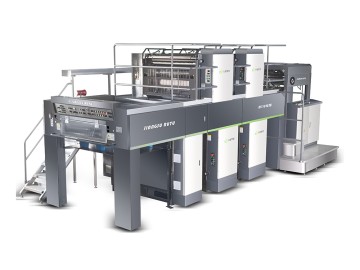
Folio, large folio, full-open, single-color, two-color double-sided offset press; High-end printing online testing machine.
Over a decade of milestones, technical integration, and steady growth in printing machinery manufacturing.
Jiangsu Ruyu Machinery Manufacturing Co., Ltd. was founded in 2014, focusing on the processing of automotive molds as its main business that year. Relying on the industrial advantages and abundant resources of the Yangtze River Delta region, the company quickly emerged as an outstanding player in the industry.
Since the beginning of 2017, the core technology, production and sales teams from the former Changsheng Group joined Jiangsu Ruyu, propelling the company's offset printing machine production onto a fast track.
In 2020, we acquired all brands and technical patents of Jiangsu Changsheng. With the 60-year professional brand legacy and technical accumulation integrated into Ruyu, it will further inspire all Ruyu people to inherit national brands and strengthen their lofty determination to revitalize China's printing machinery manufacturing industry!
The new office building has been put into use, and over 600 improvements have been made to our products. With more domestic and foreign customers coming to us by reputation, the annual sales are expected to reach a record high.
The landscape of large-format printing is evolving rapidly, driven by advancements in materials science, automation, and quality control systems. While manual screen printing machines offer unparalleled flexibility, modern manufacturers are increasingly seeking ways to integrate digital precision into manual workflows. This hybrid approach allows businesses to maintain the low setup costs of manual printing while achieving the quality standards demanded by high-tech industries.
One of the most significant trends is the adoption of advanced micro-registration systems. These mechanical systems allow operators to make micro-adjustments to the screen's position along three axes (X, Y, and Z) with sub-millimeter precision. This is critical for two-color print jobs, where even a fraction of a millimeter of misalignment can ruin the final product, especially in applications like printed electronics or backlit automotive interfaces.
Quality control has historically been a challenge in manual screen printing operations. Human error, screen clogging, and variations in squeegee pressure can lead to defects that are difficult to detect with the naked eye during a fast-paced production run. This is where the integration of online inspection machines becomes revolutionary.
By implementing high-resolution camera systems and optical inspection software at the end of the printing line, manufacturers can inspect every single sheet in real-time. These systems automatically detect printing defects such as pinholes, ink smudges, color variation, and registration errors. This immediate feedback loop allows manual operators to adjust their technique or clean the screen before producing a large quantity of scrap material, significantly improving yield rates and reducing waste.
Environmental sustainability is another key driver of change in the printing industry. Traditional solvent-based inks, which release volatile organic compounds (VOCs) during the drying process, are increasingly being replaced by water-based and UV-curable inks. UV-LED curing technology, in particular, has gained widespread adoption due to its low energy consumption, instant curing capability, and minimal heat generation—making it ideal for heat-sensitive plastic substrates.
Manual screen printing machines are easily adapted to these new ink systems. Because manual tables can be paired with modular curing units (such as conveyor-belt UV dryers), manufacturers can upgrade their curing technology without needing to replace the entire printing press. This modularity ensures that manual printing remains a future-proof investment.
To reduce operator fatigue and improve consistency on large-format runs, modern manual screen printing machines often incorporate semi-automated features. Pneumatic squeegee assists, vacuum-assisted beds, and automatic screen lift mechanisms help the operator maintain a consistent printing speed and pressure throughout the day. This combination of human oversight and mechanical assistance represents the sweet spot for many specialty printing operations, balancing quality, flexibility, and cost.
Explore our full catalog of high-precision offset presses and advanced online quality inspection systems designed for industrial scale.