Leave Your Message
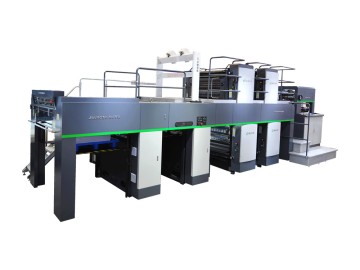
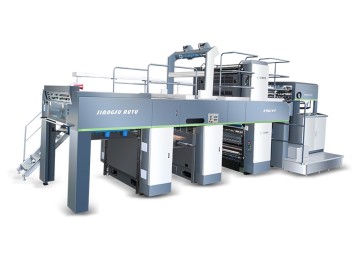
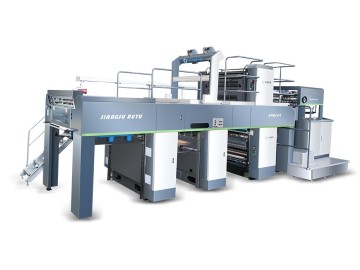
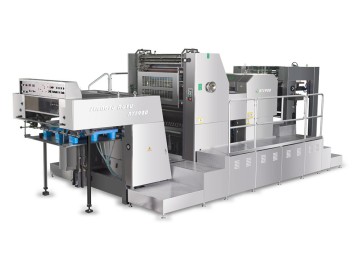
Integrating high-stability monochrome and multi-color sheet-fed offset architectures with AI optical inspection platforms to guarantee flawless registration and 100% defect-free manufacturing of ultra-lightweight pharmaceutical leaflets.
How manual screen printing engineering converges with large-format sheet-fed double-sided offset lithography in secondary pharmaceutical packaging and technical insert fabrication.
In modern industrial printing, high-speed rotary presses and high-precision sheet-fed offset presses reign supreme for mass volume production. However, specialized packaging inserts and medical leaflet manufacturing present unique technical constraints that automated rotary flexo or standard litho units cannot always address economically or mechanically. The manual screen printing machine for specialized packaging insert and leaflet manufacturing occupies a critical technical space at the junction of custom low-volume runs, functional tactile coatings, conductive track application, and stringent regulatory prototyping.
Pharmaceutical patient information leaflets (PILs), cosmetic regulatory folding cards, medical device instructions for use (IFUs), and luxury warranty certificate inserts frequently necessitate extreme chemical opacity, high film-weight deposits, Braille dot formation, scratch-off security layers, or anti-counterfeit luminescent pigments. Automated inline cylinders often struggle with substrate deformation on fragile bible papers (ranging from 28 gsm to 50 gsm) or experience astronomical setup wastage when applying heavy pigment viscosities. Here, manual and semi-precision screen printing workstations provide operators with micro-metrical squeegee pressure control, adaptable mesh angles, and customizable flood stroke profiles that preserve ultra-thin paper structural integrity while delivering unmatched ink film thickness.
Enables screen mesh deposition up to 35-50 microns, mandatory for sensory Braille lettering and distinct high-gloss tactile barriers directly compliant with EN 15823 standards.
From fragile featherweight bible tissue to multilayer folding cardboards, vacuum platens and precise counterweight systems prevent sheet tear and register distortion.
Accurate deposition of optically variable inks (OVI), taggant phosphors, UV-reactive indicators, and conductive security circuits for premium brand authentication.
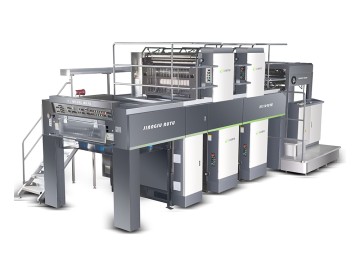
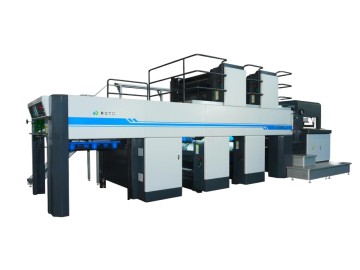
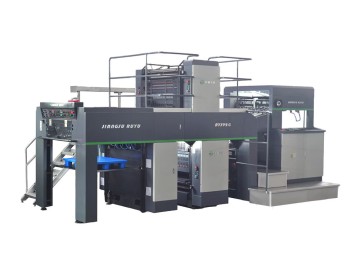
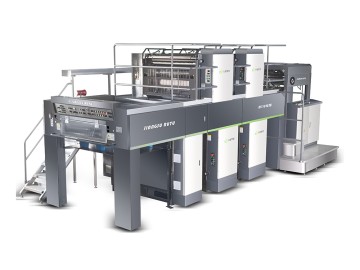
Global health authorities, including the European Medicines Agency (EMA) and the FDA, enforce strict legibility and tactile accessibility guidelines on pharmaceutical outer packs and comprehensive medication guides. While high-speed sheet-fed offset presses (such as the Ruyu Double-Sided Two-Color Offset Series) execute the dense body text, contraindication tables, and active ingredient warnings on ultra-thin 32–40 gsm sheets with razor-sharp micro-lettering clarity, specialized manual screen machines frequently serve as the offline precision tool for specialized pilot trials, clinical batches, and high-dot Braille verification.
Applying UV-curable polymer embossing directly onto delicate tissue paper stock requires pinpoint rheological control. Excess squeeze pressure will penetrate the porous paper, resulting in back-side ink strike-through and ruined legibility. Insufficient ink deposition fails the tactile dot height specification (≥ 0.20 mm). A calibrated manual screen printing setup enables technical print masters to dial in stroke velocity, durometer hardness (typically 75–85 Shore A), and screen snap-off distances within tenths of a millimeter before full-scale commercialization.
In high-value consumer goods, medical diagnostics, and telecommunication warranty leaflets, serialized scratch-off panels conceal dynamic QR codes, authentication keys, or unique patient identification tokens. Standard litho units cannot deliver the sheer opacity required to render the underlying security data invisible to intense backlight scrutiny. Through high-tension polyester (120T to 150T) or stainless-steel mesh stencils, manual screen printing delivers thick, opaque solvent- or UV-based release varnishes followed by an impervious opaque silver scratch-off layer. The manual platform prevents tension stretch on lightweight leaflet sheets, maintaining geometric accuracy across thousands of validation iterations.
The contemporary smart factory workflow does not pit manual craftsmanship against high-speed automation; it bridges them synergistically. An industrial manufacturing line for specialized inserts operates as a sequenced ecosystem:
State-level high-tech machinery leader offering the most comprehensive variety of sheet-fed double-sided printing machinery and intelligent online visual inspection solutions in China.
Jiangsu Ruyu Machinery Manufacturing Co., Ltd. is a state-level high-tech enterprise with the most complete variety of sheet-fed double-sided printing machines in China, and a precision machinery manufacturing enterprise integrating R & D, manufacturing, sales and service.
The company has a complete set of printing machine parts processing capacity and the whole process of quality testing means. Compared with foreign advanced double-sided printing machine manufacturing technology, it has formed its own core competitiveness and provided domestic leading double-sided printing solutions to the market.
Company area: More than 35,000 square meters
Creation Date: March 2014
Registered capital: 68.8 million yuan
Number of employees: 102 (middle and senior technicians account for >40%)
Brand models: Ruyu
Main products: Folio, large folio, full-open, single-color, two-color double-sided offset press; High-end printing online testing machine
Six decades of accumulated technological legacy merged with modern precision innovation to revitalize the global printing press landscape.
Jiangsu Ruyu Machinery Manufacturing Co., Ltd. was founded in 2014, focusing on the processing of automotive molds as its main business that year. Relying on the industrial advantages and abundant resources of the Yangtze River Delta region, the company quickly emerged as an outstanding player in the industry.
Since the beginning of 2017, the core technology, production and sales teams from the former Changsheng Group have joined Jiangsu Ruyu, propelling the company's offset printing machine production onto a fast track.
In 2020, we acquired all brands and technical patents of Jiangsu Changsheng. With the 60-year professional brand legacy and technical accumulation integrated into Ruyu, it will further inspire all Ruyu people to inherit national brands and strengthen their lofty determination to revitalize China's printing machinery manufacturing industry!
The new office building has been put into use, and over 600 improvements have been made to our products. With more domestic and foreign customers coming to us by reputation, the annual sales are expected to reach a record high-----
Overcoming sheet feeding flutter, static cling, ink bleeding, and dimensional distortion across lightweight uncoated substrates.
The production of specialized packaging inserts—particularly in the pharmaceutical and medical device domains—presents some of the most unforgiving challenges in the printing trade. Unlike conventional commercial advertising leaflets printed on 115–170 gsm coated art paper, medication instruction leaflets use ultra-lightweight Bible or opaque offset paper typically weighing between 28 gsm and 45 gsm. This drastic reduction in basis weight is mandatory to allow folded package inserts to collapse down to thumbnail dimensions while cramming up to 50,000 words of technical pharmacological dosage data.
At 32 gsm, paper fibers possess minimal tensile stiffness. When such paper comes into contact with high-viscosity screen printing inks or dampening solutions, several physical anomalies occur:
The modern packaging insert converting plant cannot rely on manual spot sampling. A missing decimal point in a drug dosage chart (e.g., printing "10 mg" instead of "1.0 mg") can result in life-threatening health hazards, astronomical liability, and catastrophic product recalls. This is why intelligent visual inspection platforms—such as Ruyu's RYJC Series Double-Sided Online Testing Machines—have become standard infrastructure alongside sheet-fed double-sided printing machinery.
These vision systems leverage multi-line high-resolution CCD cameras, precision telecentric optical lenses, and neural image comparison algorithms. As sheets travel at speeds exceeding tens of thousands of revs per hour, the optical engine captures sub-millimeter defects:
By pairing the foundational throughput of high-speed double-sided printing and online verification with agile manual screen workstations for specialized spot security, convertors obtain an airtight quality ecosystem that meets the highest cGMP, ISO 9001, and ISO 15378 medical packaging standards.
Browse our comprehensive series of sheet-fed double-sided monochrome/two-color offset printing presses and high-speed online optical inspection systems.
Selecting equipment for specialized packaging inserts and leaflet manufacturing requires a careful balance between high-volume efficiency and specialized spot capabilities. High-throughput double-sided offset lithography forms the indispensable foundation for dense, multi-page instructional copy, where perfect registration across both sides of ultra-thin substrates is non-negotiable. Concurrently, manual screen printing machinery remains the definitive solution for high-density, tactile, and specialty ink applications that automated systems cannot replicate with the same level of flexibility and cost-efficiency.
Combined with AI-driven, 100% online defect inspection systems, this integrated approach ensures packaging converters achieve unmatched productivity, zero-defect compliance, and full adherence to global pharmaceutical and premium consumer packaging standards.