
Leave Your Message
Leveraging heavy industrial engineering, high-precision metallurgy, and global logistics networks, our four major industrial segments work in synergy to deliver world-class double-sided offset printing presses and components.

With a history of over 30 years, the company's chairman personally oversees its operations. It has participated in the construction of numerous national key projects, and its involvement in high-speed railway projects alone includes the Harbin-Dalian High-Speed Railway, Qingdao-Rongcheng Intercity Railway, Datong-Xi'an High-Speed Railway, Beijing-Shenyang High-Speed Railway, Beijing-Shanghai High-Speed Railway, among others.
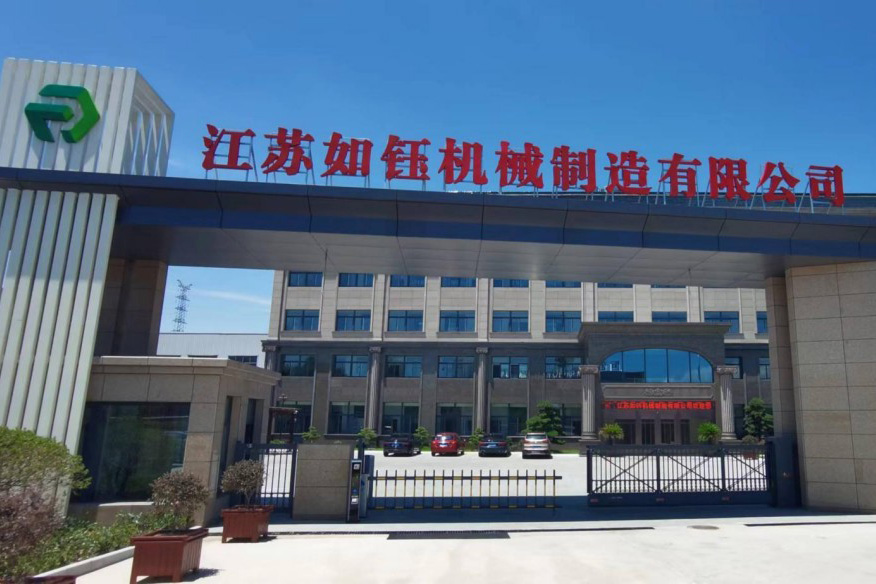
Founded in 2014, the company acquired a printing machine manufacturer with a 70-year history in 2020. It produces 100 units of double-sided printing machines of various models annually and is the largest manufacturer of double-sided printing machines in China in terms of sales volume.
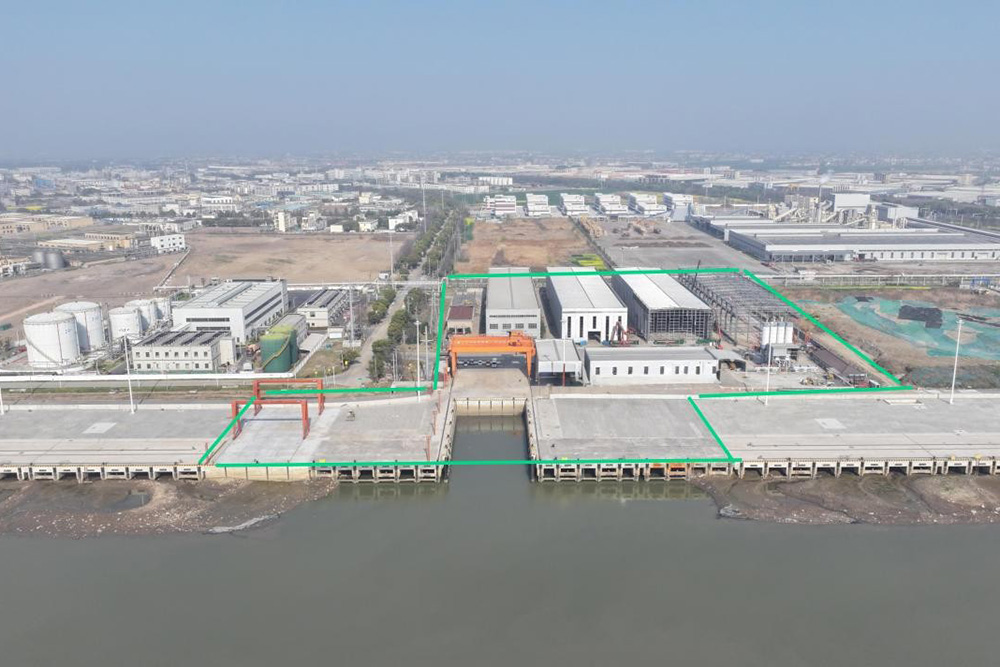
Located at the estuary of the Yangtze River, the company covers a land area of 160,000 square meters and provides services for clients/projects including Datang Power, Huaneng Power Plants, and the Hutong Yangtze River Bridge. It also owns two 10,000-ton-class docks with a total value of 200 million yuan (RMB).
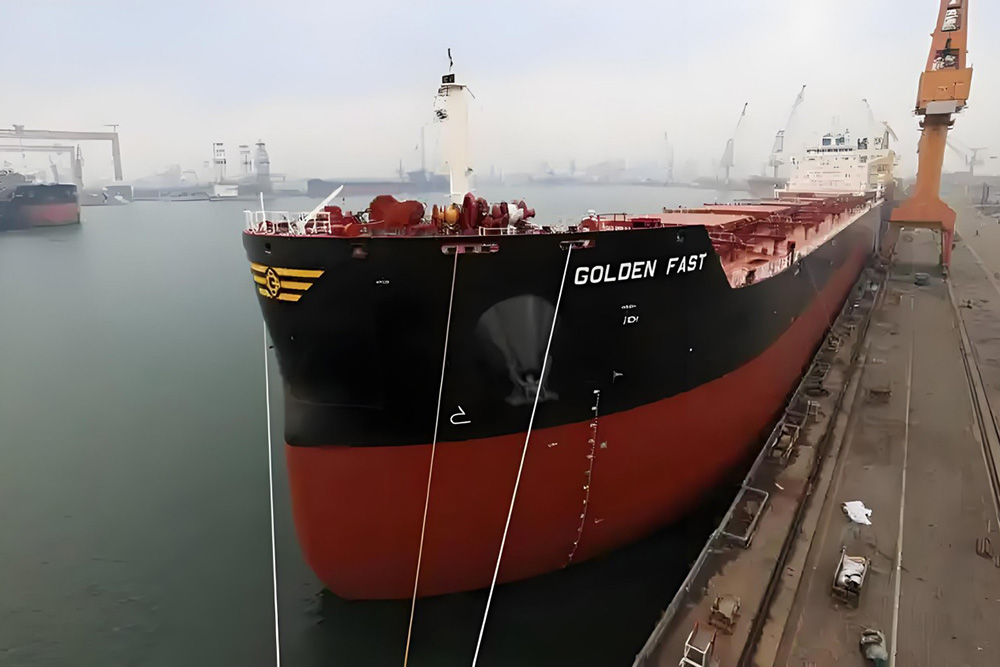
It owns 5 10,000-ton-class cargo ships, and continues to invest funds to expand its scale. Its medium-term goal is to have 20 cargo ships for various purposes, with a total tonnage reaching 500,000 DWT (Deadweight Tonnage).
In the modern commercial printing landscape, efficiency is no longer just a metric—it is the boundary between profitability and obsolescence. Commercial print shops face relentless pressure to deliver high-quality, double-sided catalogs, books, manuals, and marketing collateral with quick turnarounds. Offset printing remains the gold standard for high-volume runs due to its unmatched cost-per-page efficiency and superior color fidelity. However, the mechanical complexity of modern sheet-fed double-sided printing machinery means that even a minor failure in a single component can halt an entire production line, costing thousands of dollars per hour.
This is where high-quality print machinery components become the unsung heroes of the pressroom. From precision-engineered gripper shafts and impression cylinders to high-speed feeder head components, every mechanical part must perform in perfect harmony. At speeds exceeding 10,000 sheets per hour, a tolerance deviation of just a few microns can lead to ink misregistration, sheet jams, or excessive make-ready waste. Investing in robust, wear-resistant parts ensures that commercial presses maintain their mechanical integrity through millions of impressions, facilitating the rapid job setup and consistent run speeds required for tight delivery schedules.
The global printing industry is experiencing a profound shift toward automation and hybrid workflow models. Commercial print shops are increasingly utilizing double-sided (perfecting) offset presses to print both sides of the sheet in a single pass. This effectively cuts production time in half and eliminates the need to dry, turn, and reload paper.
To support these rapid cycles, component manufacturing must evolve. Modern print machinery components now integrate advanced surface treatments, such as diamond-like carbon (DLC) coatings on grippers and ceramic-faced rollers, to resist abrasive ink chemistry and paper dust. Additionally, the rise of digital integration within offset presses—such as automatic plate-changing systems and remote ink fountain keys—requires components that interface seamlessly with electronic control systems, enabling rapid adjustments and minimal operator intervention.
How precision component manufacturing and strict R&D investment translate to real-world performance gains for high-volume commercial print environments.
Dedicated to continuous material science and mechanical optimization.
Iterative upgrades designed to eliminate micro-stops and reduce wear.
All critical parts undergo secondary heat treatment for ultimate stability.
In addition, Ding Bangguo, the company's chairman, also proposed that enterprise management should practice the "Three Minds" – namely the "Mind of Vitality", the "Mind of Diligence" and the "Mind of Belonging". This initiative aims to build China's top brand in double-sided printing machinery manufacturing and enhance employees' sense of happiness. The company adheres to its corporate goal of "customer-centricity, where customer satisfaction is our eternal pursuit", upholds the concept of win-win cooperation, and actively builds Ruyu into a renowned brand of Chinese sheet-fed double-sided printing machinery with the "craftsmanship spirit".
Innovation and integration, honesty and modesty, good learning and success, self-transcendence.
Let China's printing press manufacturing industry shine in the world.
RUYU intelligent manufacturing,word-class quality
Build an Integrity-Based Enterprise, Create Brand-Name Products
To understand why high-precision components are critical, we must analyze their performance within the high-stress cycles of commercial print shops. Offset printing is a mechanical ballet of pressure, chemistry, and timing. Let us explore three key application scenarios where component quality dictates the success of a quick turnaround job:
At the start of the press, the feeder head must lift and separate individual sheets of paper ranging from thin 60gsm text stock to heavy 350gsm cover boards. Precision sucker nozzles, separator feet, and forwarding rollers must operate in microsecond intervals. If the gripper edge of the sheet is misaligned by even 0.1mm at the pull gauge, the color register will shift, ruining the print. High-quality feeder components with wear-resistant polyurethane tips and lightweight aluminum bodies ensure consistent sheet separation even at maximum press speeds.
In double-sided offset presses, the perfecting unit (or transfer cylinder) reverses the sheet to print the reverse side. This mechanical handoff occurs at full speed. The grippers on the transfer cylinder must grab the tail of the sheet, flip it, and pass it to the next impression cylinder without marking the wet ink on the side that was just printed. This requires specially coated gripper pads with anti-marking jackets on the transfer cylinders. Any mechanical play or wear in the perfecting cams will result in ghosting or sheet tearing, rendering the quick turnaround job a costly failure.
Achieving consistent color density across a 10,000-sheet run requires precise control of the ink-dampening balance. Ink fountain keys must adjust dynamically to regulate the flow of ink onto the rollers. High-precision motorized ink keys, combined with dynamically balanced dampening rollers, respond instantly to digitized color profiles. This reduces the make-ready waste from 500 sheets down to less than 50 sheets, allowing commercial print shops to run short-run, quick-turnaround orders profitably.
We persist in allocating 5.08% of annual sales revenue as special R&D funds. Our commitment to innovation is the engine driving our global competitiveness.
The technical team has maintained close cooperation with domestic universities and colleges. Adhering to the combination of independent innovation and technology introduction, the team has made over 600 improvements to its products in various aspects. Compared with five years ago, the products have achieved a qualitative leap in all aspects.
It has the capability to rapidly and systematically initiate the development of multi-color offset printing machines.
Our R&D framework focuses heavily on mechanical fatigue testing, thermal expansion analysis of print cylinders, and high-frequency vibration damping. This ensures that every component shipped to a commercial print shop is optimized for longevity and rapid, continuous operation.
It has purchased brand-new high-precision main processing equipment for consecutive years, with its equipment level and processing accuracy leading the industry. All key components are independently processed in-house.
The selected high-grade castings all undergo secondary heat treatment to eliminate internal stress, ensuring the machine maintains its shape without deformation during long-term use.
It possesses domestically advanced processing capabilities for key components of double-sided printing machines, as well as robust quality inspection capabilities.
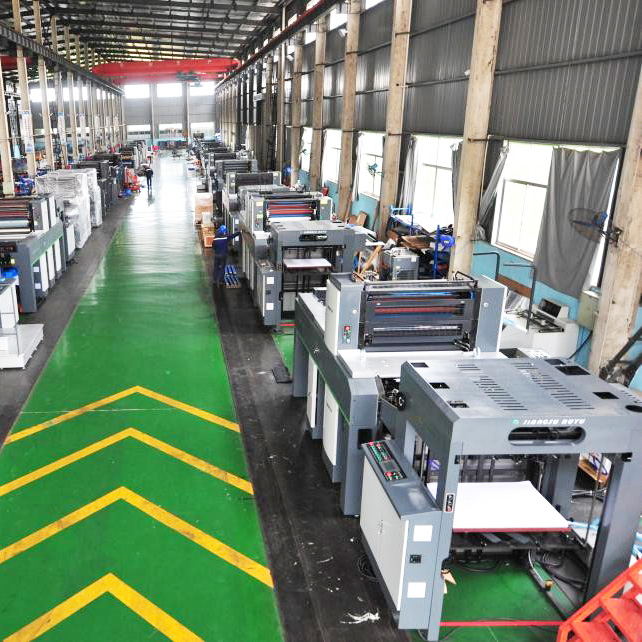
The mechanical stresses inside a sheet-fed offset press are extreme. Fast-moving cylinders generate substantial centrifugal forces, and continuous contact between heavy rollers creates thermal gradients that can cause metals to expand. If a printing cylinder expands unevenly by even a fraction of a millimeter, it alters the printing pressure, leading to ink density variations across the sheet.
To prevent this, our manufacturing process utilizes high-grade, alloyed iron castings that undergo a rigorous secondary heat treatment. The first heat treatment relieves the initial stress of casting, while the secondary aging process stabilizes the crystalline structure of the metal. This ensures that when the casting is machined into an impression cylinder or a side frame, it will never warp, twist, or deform under the load of continuous 24/7 printing cycles.
Furthermore, gear trains in offset presses require absolute precision. We utilize helical gears manufactured from high-strength alloy steel, case-hardened and ground to DIN 5 tolerances. Helical gears provide smoother power transmission than spur gears, reducing gear streaks (slur) on the printed sheets. This level of metallurgical discipline is what allows commercial print shops to run their presses at maximum speeds, secure in the knowledge that their machinery will maintain its accuracy year after year.
Explore our range of precision-engineered components designed to minimize make-ready times, prevent paper jams, and ensure flawless double-sided print execution.
Featuring secondary heat-treated castings with anti-marking ceramic coatings, optimized for flawless sheet transfer during perfector runs.
Equipped with diamond-coated gripper pads to guarantee slip-free paper control at speeds up to 15,000 sheets per hour.
Pneumatic clamping mechanisms designed for fast-action plate release, cutting make-ready times down to under 2 minutes.
Laser-ground ink keys with ultra-precise stepper motor integration for instantaneous, digitized ink profile adjustments.
Dynamic air-blast separation nozzles and sucker mechanisms that handle stock weights from onion-skin to heavy packaging board.
Case-hardened drive train gears ground to DIN 5 standards, minimizing rotational backlash and eliminating gear streaks.
Hydrophilic roller coverings designed to maintain a consistent, micro-thin water film for stable emulsification control.
Ultrasonic sensor modules that immediately halt the press feed if overlapping sheets are detected, protecting delicate plates.