Leave Your Message
In the digital age, physical educational materials remain an irreplaceable cornerstone of effective learning and cognitive development. Global demand for school notebooks, exercise books, workbook prints, and highly secure educational test papers continues to grow, particularly across developing economies and highly structured public education systems. According to educational research, tactile interaction with paper significantly enhances memory retention, comprehension, and focus in primary and secondary students. Consequently, printing houses worldwide are facing unprecedented volume demands, requiring high-speed, cost-efficient, and reliable printing equipment for educational test paper and notebook printing.
The industrial printing sector is shifting rapidly from low-volume digital runs back to high-capacity, specialized double-sided offset printing presses for mass educational publications. The economics of school notebook manufacturing demand high-output sheet-fed offset solutions that can run continuously with minimal downtime. Equipment must be capable of processing lightweight papers, which are standard for educational materials, without tearing or misaligning. High registration accuracy is vital, especially when printing fine grid lines, margin guidelines, and double-sided text on thin paper stocks.
For educational test papers, there is zero tolerance for printing defects. A single stray ink dot, a missing decimal point, or a smudged line can alter the meaning of a question, potentially compromising national examination results. Consequently, modern print shops are integrating advanced AI-powered online inspection systems directly into their double-sided offset printing presses to ensure 100% accuracy in real-time.
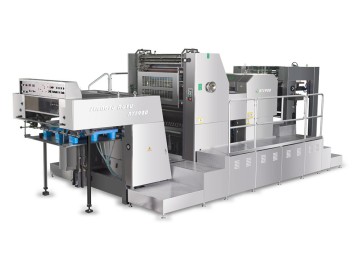
Test paper printing is a seasonal but highly intensive operation that demands absolute confidentiality, speed, and precision. Security protocols often require test papers to be printed within closed, high-security facilities within tight deadlines. The printing equipment must offer high output speeds (exceeding 10,000 sheets per hour) and absolute reliability. Because test papers are mostly monochrome or two-color (black for text, red/blue for grading marks or diagrams), double-sided monochrome and double-color sheet-fed offset presses are the industry standard. Online inspection machines, such as the RYJC series, scan every sheet in real-time to detect misprints, double-feeding, or ink splatters, flagging errors before the papers are sorted and packaged.
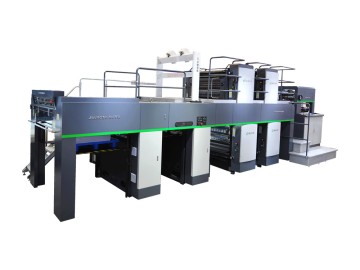
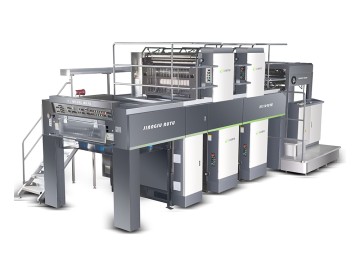
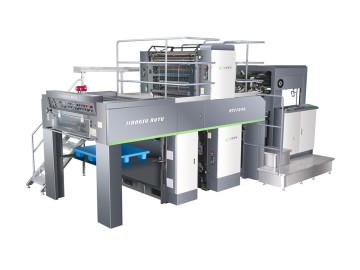
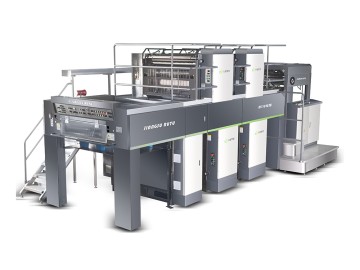
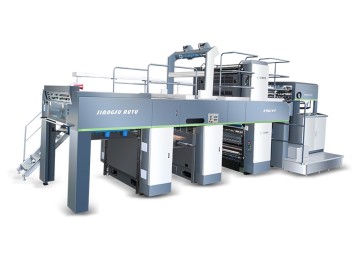
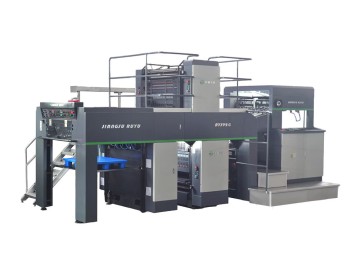
School notebooks, graph books, and writing pads require precise ruling lines (horizontal lines, vertical margins, or grid structures) on both sides of the paper. Standard printing machines often struggle with paper stretching, which causes misalignment between the front and back pages. RYS series double-sided offset printing presses solve this issue by using synchronized double-sided printing cylinders that apply ink to both sides of the sheet in a single pass. This ensures perfect registration of lines and grids, minimizing waste and ensuring that notebooks meet strict educational standards.
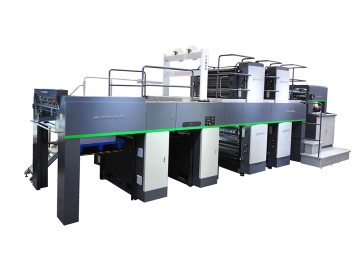
While basic notebooks are monochrome, modern educational workbooks utilize two-color layouts to highlight key concepts, vocabulary, and formulas. The integration of double-sided double-color offset printing machinery allows publishers to print rich, engaging educational layouts cost-effectively. By combining two colors on each side in one pass, printing companies reduce production cycles by 50% compared to traditional single-sided or single-color presses that require multiple runs through the machine.
As the printing industry moves toward intelligent automation, several trends are defining the future of educational printing equipment:
In addition, Ding Bangguo, the company's chairman, also proposed that enterprise management should practice the "Three Minds" – namely the "Mind of Vitality", the "Mind of Diligence" and the "Mind of Belonging". This initiative aims to build China's top brand in double-sided printing machinery manufacturing and enhance employees' sense of happiness. The company adheres to its corporate goal of "customer-centricity, where customer satisfaction is our eternal pursuit", upholds the concept of win-win cooperation, and actively builds Ruyu into a renowned brand of Chinese sheet-fed double-sided printing machinery with the "craftsmanship spirit".
Innovation and integration, honesty and modesty, good learning and success, self-transcendence.
Let China's printing press manufacturing industry shine in the world.
RUYU intelligent manufacturing, world-class quality.
Build an Integrity-Based Enterprise, Create Brand-Name Products.

With a history of over 30 years, the company's chairman personally oversees its operations. It has participated in the construction of numerous national key projects, and its involvement in high-speed railway projects alone includes the Harbin-Dalian High-Speed Railway, Qingdao-Rongcheng Intercity Railway, Datong-Xi'an High-Speed Railway, Beijing-Shenyang High-Speed Railway, Beijing-Shanghai High-Speed Railway, among others.
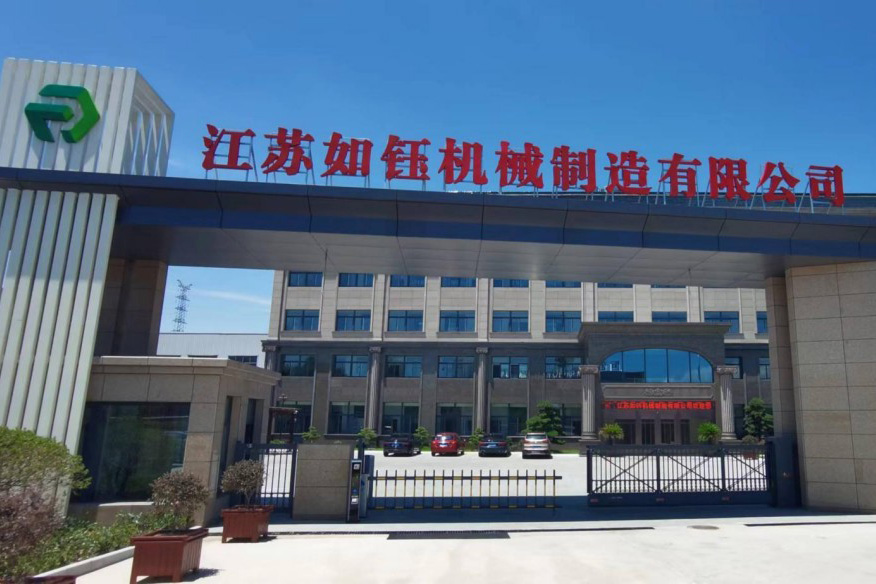
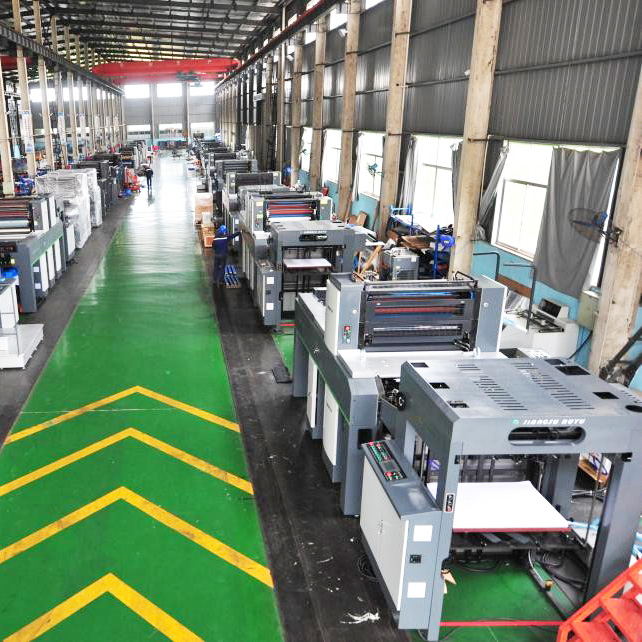
Founded in 2014, the company acquired a printing machine manufacturer with a 70-year history in 2020. It produces 100 units of double-sided printing machines of various models annually and is the largest manufacturer of double-sided printing machines in China in terms of sales volume.
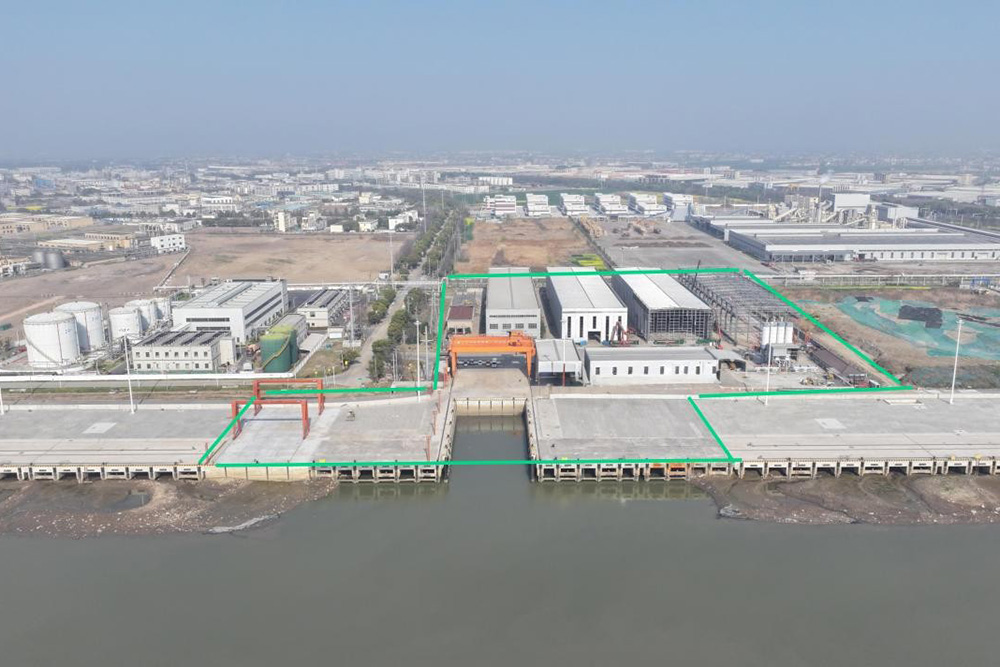
Located at the estuary of the Yangtze River, the company covers a land area of 160,000 square meters and provides services for clients/projects including Datang Power, Huaneng Power Plants, and the Hutong Yangtze River Bridge. It also owns two 10,000-ton-class docks with a total value of 200 million yuan (RMB).
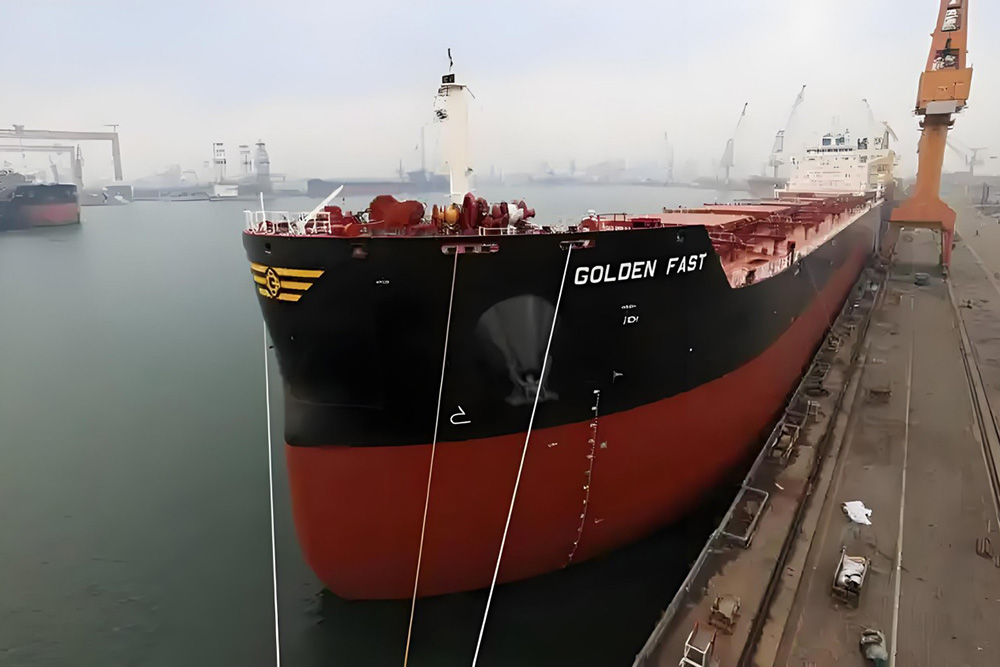
It owns 5 10,000-ton-class cargo ships, and continues to invest funds to expand its scale. Its medium-term goal is to have 20 cargo ships for various purposes, with a total tonnage reaching 500,000 DWT (Deadweight Tonnage).
We persist in allocating 5.08% of annual sales revenue as special R&D funds. Our commitment to innovation is the engine driving our global competitiveness.
It has purchased brand-new high-precision main processing equipment for consecutive years, with its equipment level and processing accuracy leading the industry. All key components are independently processed in-house.
The selected high-grade castings all undergo secondary heat treatment to eliminate internal stress, ensuring the machine maintains its shape without deformation during long-term use.
It possesses domestically advanced processing capabilities for key components of double-sided printing machines, as well as robust quality inspection capabilities.